

 Admin
Admin
More Than Just “Big”
Spanish can make grande sound bigger, softer, friendlier, or more expressive with a few small changes.
Grande usually means big, large, or great.
But in everyday conversation—especially in Mexico and other parts of Latin America—people often change the word:
grande
grandote
grandecito
grandísimo
and more…
These forms do not all mean exactly the same thing. The ending can make something sound enormous, somewhat large, affectionate, surprising, or simply more conversational.
The basic word: grande
Grande is the neutral word for “big” or “large.” It works for people, animals, objects, places, and abstract ideas.
La casa es grande.
The house is big.
Mi perro ya está grande.
My dog is already big.
Es una ciudad grande.
It is a big city.
Tengo un problema grande.
I have a big problem.
Remember that grande becomes grandes in the plural, but it does not change for masculine and feminine nouns:
un coche grande — a big car
una casa grande — a big house
unos perros grandes — big dogs
unas casas grandes — big houses
What does grandote mean?
Grandote is an informal augmentative form of grande. The ending -ote often makes the original idea bigger or stronger.
So grandote can mean:
- really big
- huge
- big and bulky
- big in a noticeable way
¡Qué perro tan grandote!
What a huge dog!
Es un muchacho grandote.
He is a big, physically imposing young man.
Compraron una camioneta grandota.
They bought a really big truck.
Unlike plain grande, grandote sounds more vivid and informal. You can almost picture the person or object taking up a lot of space.
It can be neutral:
El bebé está grandote.
The baby is getting big.
It can also be affectionate:
¡Mira qué grandote está mi niño!
Look how big my boy is getting!
But depending on the context, it may suggest that someone is bulky, clumsy, or a little too large for the situation. The tone matters.
Grandote and agreement
Because grandote is an adjective, it changes for gender and number.
| Form | Example | English |
|---|---|---|
| grandote | un niño grandote | a big boy |
| grandota | una niña grandota | a big girl |
| grandotes | unos perros grandotes | some big dogs |
| grandotas | unas casas grandotas | some really big houses |
What does grandecito mean?
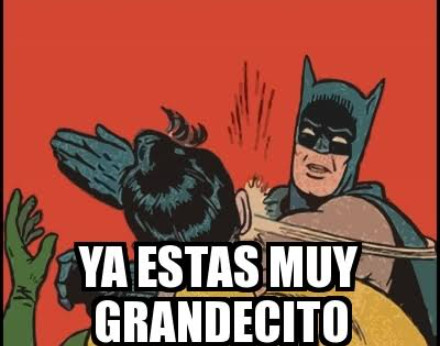
Grandecito may look strange at first. If -ito often makes a word smaller, why does grandecito mean “kind of big”?
The ending does not always mean that something is physically small. With grandecito, it often softens the adjective:
- somewhat big
- fairly large
- on the large side
- big, but not enormous
- old enough
Es un departamento grandecito.
It is a fairly large apartment.
La porción está grandecita.
The portion is pretty large.
Tenemos una sala grandecita.
We have a fairly spacious living room.
It can also sound friendly or less blunt. Instead of making a strong statement such as Es enorme, a speaker may say Es grandecito to make the description feel more relaxed.
In Mexico and other parts of Latin America, diminutives such as -ito and -ita often express more than physical smallness. They can soften an idea, show affection, or make an expression sound more conversational.
The difference between grande, grandote, and grandecito
| Word | Basic Feeling | Example |
|---|---|---|
| grande | Neutral: big or large | una casa grande |
| grandote | Really big, bulky, or noticeably large | una casa grandota |
| grandecito | Fairly big, somewhat large, mature enough, or softly expressed | una niño grandecito |
Compare these sentences:
Vive en una casa grande.
He lives in a big house.
Vive en una casa grandota.
He lives in a really big house.
Vive en una casa grandecita.
He lives in a fairly large house.
The difference is not always exact. These words depend on the speaker’s perspective. A house that one person calls grandecita may seem grandota to someone else.
Other useful forms
Grandísimo
Grandísimo is the superlative form. It means “enormous,” “very large,” or “extremely big.”
Es un problema grandísimo.
It is a huge problem.
La casa es grandísima.
The house is enormous.
This form is stronger and more straightforward than grandote. It emphasizes size or importance without necessarily sounding playful.
These forms can describe more than size
Grande does not always mean physical size. It can also mean important, serious, impressive, or significant.
Es una gran persona.
She is a great person.
Tiene un gran corazón.
He has a big heart.
Es un gran problema.
It is a major problem.
With these meanings, changing the suffix can change the feeling:
Es un problemón.
It is a huge problem.
Tiene un corazón grandote.
He has a very big, generous heart.
Here, grandote may refer to generosity or warmth rather than the physical size of a heart.
That is one reason these forms are so expressive. Spanish suffixes can describe size, but they can also add emotion, emphasis, affection, humor, or criticism.
A small note about gran
Before a singular masculine or feminine noun, grande often becomes gran when it means “great” or “important.”
un gran hombre
a great man
una gran mujer
a great woman
But when grande refers mainly to physical size, it usually stays after the noun:
un hombre grande
a big man
una mujer grande
a big woman
Compare:
- Es un gran hombre. — He is a great man.
- Es un hombre grande. — He is a big man.
This difference is separate from grandote and grandecito, but it is useful because learners often see all these forms together.
The easy way to remember them
Grande is the neutral word:
La casa es grande.
The house is big.
Grandote makes the image bigger and more noticeable:
La casa es grandota.
The house is really big.
Grandecito softens the description and often means fairly large or somewhat big:
La casa es grandecita.
The house is fairly large.
Grandísimo turns up the intensity:
La casa es grandísima.
The house is enormous.
The suffix does not work like a mathematical formula. It gives you a clue about the speaker’s attitude, but the exact feeling comes from the context, the country, and the person’s tone.