

 Admin
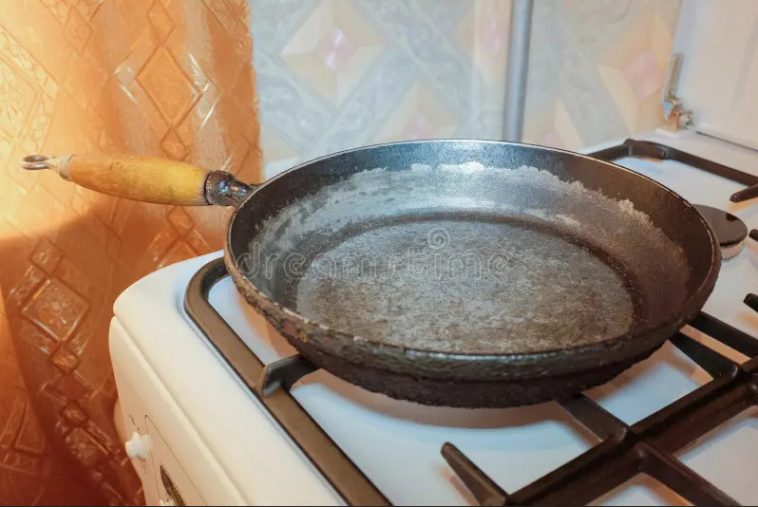
Sometimes both are right. The difference may come down to where you grew up—or who taught you to cook.
You learn a Spanish noun with its article, practice it, and finally feel comfortable using it. Then someone from another country uses the other article.
Wait. Is it el sartén or la sartén?
In this case, both. The same goes for el maratón and la maratón. The word has not changed, and neither has its meaning.
Spanish calls these sustantivos ambiguos en cuanto al género: nouns that can be used as masculine or feminine without changing what they refer to. That does not mean every speaker switches freely between the two. Often, one version sounds completely normal to you and the other sounds like something your cousin from another country would say.
Nouns that allow both genders
| Noun | English | Usage and preferences |
|---|---|---|
| el sartén / la sartén | frying pan | In Spain, la sartén is the usual form. In Latin America, both occur, with masculine usage predominating overall. El sartén is familiar in Mexico, though la sartén is also used. |
| el maratón / la maratón | marathon | Both are accepted. The word originally entered Spanish as masculine; the feminine developed under the influence of words such as la carrera and la prueba. There is no simple country-by-country rule. |
| el azúcar / la azúcar | sugar | Both genders are accepted, but el azúcar is much more usual when the noun appears on its own. With adjectives, both masculine and feminine forms occur: azúcar blanco or azúcar blanca. |
| el mar / la mar | sea | El mar is the everyday choice in general Spanish. La mar is especially associated with sailors, fishing communities, and poetry. It also appears in established expressions such as alta mar. |
| el armazón / la armazón | frame; framework | Both are valid for the supporting structure of something. You may hear el armazón de la cama or la armazón de la cama. The choice does not change the basic meaning. |
| la tilde / el tilde | written accent; small written mark | La tilde is overwhelmingly usual in most places. Uruguay is a notable exception: el tilde is the normal local choice. Both genders are accepted. |
| el interrogante / la interrogante | question; unresolved issue | Both are accepted when the meaning is a question or an uncertainty, though masculine usage predominates in formal writing. When it means the punctuation mark itself, it is masculine: el interrogante. |
| el aneurisma / la aneurisma | aneurysm | Both genders are valid, but el aneurisma is now more common and is the recommended choice in the Diccionario panhispánico de dudas. The ending -a does not automatically make a noun feminine. |
The adjective usually follows your choice
If you choose the masculine form, the adjective normally goes with it. If you choose the feminine, the adjective changes too.
El sartén está caliente. Compré uno nuevo.
The frying pan is hot. I bought a new one.
La sartén está caliente. Compré una nueva.
The frying pan is hot. I bought a new one.
Or compare:
Fue un maratón agotador.
Fue una maratón agotadora.
It was an exhausting marathon.
You do not need to alternate between the two to show that you know them. Use the version that fits the Spanish you speak, and recognize the other when you hear it.
Azúcar has its own little complication
You may hear azúcar blanca, azúcar blanco, mucha azúcar, or mucho azúcar. These reflect the fact that the noun accepts both genders.
There is even a familiar combination that looks inconsistent at first:
El azúcar es blanca.
The sugar is white.
With this particular noun, a feminine adjective can appear alongside the article el. Treat it as a special case, not a pattern to copy with all the nouns in the table.
Not the same as el agua—or el capital
El agua is different. Agua is always feminine. It takes el directly before it because it begins with a stressed a sound, but the adjective stays feminine: el agua fría. In the plural, it is las aguas.
And some nouns change meaning when you change the article. El capital refers to money or financial resources; la capital is a capital city. Those are not interchangeable versions of the same meaning.
The nouns in our table are different: the pan is still the same pan, and the marathon is still just as exhausting.
If you grew up hearing el sartén, la sartén may sound odd. Someone raised with la sartén may have exactly the opposite reaction. In Mexico, both sound correct.
That is one of the useful things about learning these words: you can stop treating every unfamiliar article as a mistake. Sometimes it is simply a clue about where the speaker comes from.