

 Admin
Admin
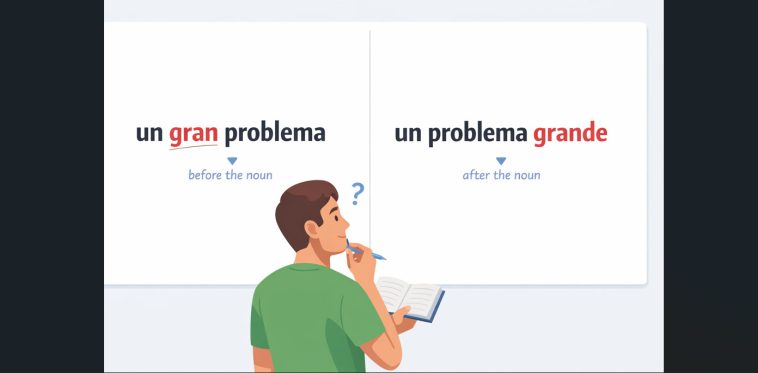
Adjectives Before and After the Noun in Spanish
Gran hombre or hombre grande?
In Spanish, the position of the adjective is not only decoration.
Sometimes, when we put the adjective before or after the noun, the meaning can change a lot.
1. Two Main Positions
- Adjective before the noun: usually more
subjective, emotional, or something the speaker already knows about the noun
(for example: un gran hombre). - Adjective after the noun: more
objective, describes the noun like one more in a group
(for example: un hombre grande).
Many adjectives keep the same meaning in both positions, but some very common ones change a lot when we move them.
2. Adjectives that Change Meaning
| Adjective | Before the noun | After the noun |
|---|---|---|
| grande / gran | un gran hombre = a great / important man | un hombre grande = a big man (size) |
| pobre | un pobre hombre = an unfortunate / pitiful man | un hombre pobre = a man without money |
| viejo | un viejo amigo = a longtime friend | un amigo viejo = a friend who is old (age) |
| nuevo | una nueva camioneta = a different / another truck | una camioneta nueva = a brand‑new truck |
| antiguo | mi antiguo jefe = my former boss | un edificio antiguo = a very old / ancient building |
| cierto | ciertas noticias = some news | noticias ciertas = news that are true / sure |
| único | la única persona = the only person | una persona única = a unique person |
| simple | un simple mesero = a mere waiter | un muchacho simple = a simple‑minded / plain boy |
In the end, learning where adjectives go in Spanish is less about memorizing long lists and more about noticing patterns. Very often the adjective simply follows the noun, especially for basic description: una casa grande, una camisa roja, un libro interesante. When the adjective moves before the noun, it usually adds something extra: a more emotional, poetic or subjective touch, or a change of meaning like un viejo amigo versus un amigo viejo. Travel agency brochures always do this: el azul mar, las blancas arenas.
Even native speakers sometimes change position on purpose to play with style. The important thing is to be clear and consistent, and to keep asking yourself: am I just describing the noun, or do I want to add a special nuance?