

 Admin
Admin
From fainting fits to “letting loose” and covering the macho’s eye
Sometimes the most confusing Spanish expressions are the ones that sound “transparent” but actually mean something completely different. In this new set of ten, you’ll see fainting fits, party mode, money slang, and even a macho bull getting his eye covered.
As always in this series, the goal is not to memorize everything at once, but to recognize these expressions when you hear them in real conversations, movies, or songs. If you can say, “Oh, I’ve seen that one before!”, that’s already a big win.
| 💬 Expression | 🤔 What you might think it means | ✅ What it really means |
|---|---|---|
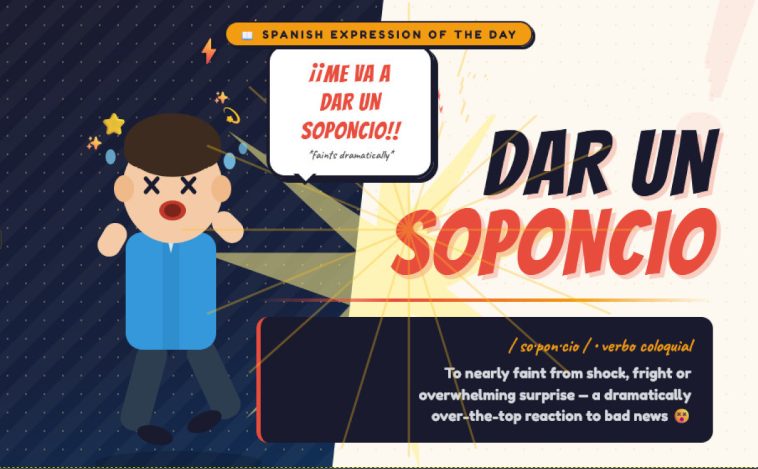
| dar un soponcio | To give something weird? Some kind of “blow”? | To faint or almost faint from shock, bad news, or heat. “Cuando vi la cuenta, casi me da un soponcio.” |
| flojo, flojonazo | Someone “loose” or weak? | A lazy person. Flojonazo is a playful / mocking way to say someone is very lazy and doesn’t want to do anything. |
| capaz que | “Capable that…”? | In several countries it means “maybe / perhaps”. “Capaz que voy, todavía no sé.” = “Maybe I’ll go, I’m not sure yet.” |
| tener buen colmillo | To have a nice fang? Nice teeth? 🦷 | To be sharp, street‑smart, experienced, especially in business, buying things, negotiating prices, or not getting fooled easily. |
| biyuyo / billuyo | A nickname? A person’s name? | Another slang for money. Similar to “cash, dough, bucks”. |
| el que se lleva se aguanta | Someone who gets along has to resist? | If you like to tease, joke, or make fun of others, you must accept it when people do the same to you. “If you play, you pay.” |
| darle vuelo a la hilacha | To make a little thread fly? | To let loose, go a bit wild, fully enjoy yourself, spend freely, party hard, or do things without holding back (often in a fun, informal context). |
| toma y daca | “Take and give”… what? | A back‑and‑forth situation: negotiation, exchanging favors, or even a fight where both sides give and receive equally. |
| muchos ayeres / los ayeres | Many “yesterdays”? | A poetic or nostalgic way to say “the past” or “many years ago”. “En mis ayeres…” = “Back in my days…”. |
| taparle el ojo al macho | To cover the macho male’s eye? 👀 | To cover things up, to fake it so it “looks fine” from the outside, without really fixing the problem. A cosmetic solution just to keep appearances. |
How these expressions actually sound in real life
Many of these expressions are not “textbook Spanish,” but they show up all the time in conversations, series, and social media. Notice how several of them are about attitude and style: how you spend money, how you joke with friends, or how you decide to “let loose” for a night.
Here are a few quick examples in context:
- «Si sigues molestando a todos, acuérdate: el que se lleva se aguanta.»
- «Ayer le dimos vuelo a la hilacha en la fiesta, hoy me duele todo.»
- «No intentes taparle el ojo al macho con ese informe, el jefe va a notar los errores.»
- «Tiene mucho biyuyo porque tiene muy buen colmillo para negociar.»
You don’t have to produce all of these expressions right away, but if you can recognize them when you hear them, your listening skills (and your cultural radar) will level up quickly. Next time you hear someone say they almost got a soponcio or that they’re going to darle vuelo a la hilacha, you’ll know exactly what’s going on.