

 Admin
Admin
How to Say “Excuse Me” in Spanish
Con permiso, perdón, disculpe, lo siento, dispense and other ways to sound polite in Spanish.
English uses excuse me for many different situations: getting someone’s attention, moving through a crowd, apologizing for a small accident, asking someone to repeat something, or politely interrupting. Spanish does not rely on one phrase for all of those situations.
The good news is that Spanish gives you several useful choices. The important thing is to choose the phrase that matches what is happening: are you asking permission, making a small apology, showing real regret, or speaking in a formal setting?
The most useful choices
| Spanish expression | English meaning | When to use it |
|---|---|---|
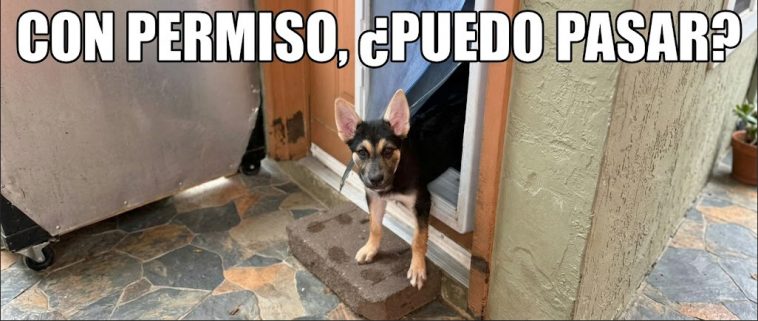
| con permiso | excuse me; with your permission | The most natural choice when you need to pass by someone, enter a room, reach for something, or leave the table. |
| permiso | excuse me; may I? | A shorter version of con permiso. Very common when moving through a crowd or asking to enter somewhere. |
| disculpe | excuse me | Polite and formal. Use it with strangers, older people, waiters, employees, teachers, or anyone you address as usted. |
| disculpa | excuse me; sorry | The informal tú version. Use it with friends, classmates, relatives, or people your age in casual situations. |
| discúlpeme | excuse me; forgive me | A more complete and polite form of disculpe. It can sound more formal or more apologetic. |
| perdón | sorry; pardon me; excuse me | Probably the most flexible option. Use it after a small accident, to interrupt, to ask someone to repeat something, or when passing by someone. |
| perdona / perdone | excuse me; forgive me | Perdona is informal; perdone is formal. Both are useful to get attention or make a quick apology. |
| perdóname / perdóneme | forgive me | More personal and more serious than simply saying perdón. Use it when you are directly asking someone for forgiveness. |
| lo siento | I’m sorry | Best for genuine regret, sympathy, or bad news. It is usually not the best choice just to squeeze past someone in a store. |
| lo lamento | I regret it; I’m sorry | More formal and often stronger than lo siento. It is common in serious apologies, condolences, and formal messages. |
| disculpas | apologies | Usually appears in phrases such as mil disculpas or ofrezco una disculpa. It sounds more formal than a quick perdón. |
| mil disculpas | a thousand apologies; I’m very sorry | A strong but common apology, especially in messages, customer service, or when you made someone wait. |
| ofrezco una disculpa | I offer an apology | Very common in Mexico, especially in public statements, work settings, customer service, and formal apologies. |
| dispense | excuse me; pardon me | A very polite and rather formal alternative to disculpe. It may sound old-fashioned in some places, but it is still understood and used in courteous speech. |
| con su permiso | with your permission | A more formal version of con permiso. Useful when entering, leaving, or interrupting in a professional or respectful setting. |
The easiest rule to remember
Con permiso is mainly about asking permission to move, enter, leave, or reach something. Disculpe and perdón are especially useful when you need someone’s attention or when you create a small inconvenience. Lo siento is more emotional: use it when you are truly sorry or when you want to show sympathy.
In other words, do not automatically translate every English “excuse me” as lo siento. If you simply need to get past someone, con permiso will usually sound much more natural.
Common situations in real life
| Situation | Natural Spanish | English |
|---|---|---|
| You need to pass through a crowded subway car. | Con permiso. | Excuse me. |
| You want to ask a stranger for directions. | Disculpe, ¿sabe dónde está el museo? | Excuse me, do you know where the museum is? |
| You accidentally bump into someone. | Perdón. | Sorry. |
| You did not hear what someone said. | ¿Perdón? | Pardon? / Sorry? |
| You are interrupting a meeting politely. | Disculpen, ¿puedo añadir algo? | Excuse me, may I add something? |
| A friend says their dog is sick. | Lo siento mucho. | I’m very sorry. |
| You arrive late for class or work. | Mil disculpas por llegar tarde. | My apologies for arriving late. |
| You want to enter an office respectfully. | Con su permiso. | With your permission. / Excuse me. |
| You want someone to repeat what they said. | Disculpe, no le escuché. | Excuse me, I did not hear you. |
| You want to sound especially courteous with a stranger. | Dispense, ¿esta silla está ocupada? | Excuse me, is this seat taken? |
Informal and formal forms
Spanish changes depending on whether you use tú or usted. With friends and people you know well, say disculpa, perdona, or discúlpame. With strangers, clients, older people, teachers, or in more formal situations, use disculpe, perdone, discúlpeme, or dispense.
When speaking to more than one person, use disculpen, perdonen, or con permiso. The expression con permiso does not need to change for formal or informal situations.
If you are not sure what to say, perdón is one of the safest all-purpose choices. But if you are moving past someone, choose con permiso; if you need a stranger’s attention, choose disculpe; and if someone shares sad news, say lo siento.
Learning these small differences will make you sound more natural, polite, and comfortable in real Spanish conversations.