

 Admin
Admin

This is Conspiración de Pasión:
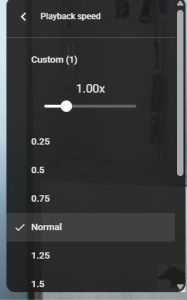
(You might need to go to this YouTube video settings and slow the Playback Speed to 0.75 or even 0.50)

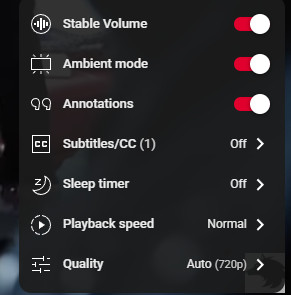
YouTube Video Settings Playback Speed
This is just a small segment of a much longer telenovela parody. The automatic video subtitles are not accurate.
| Español (Original) | English (Translation) | Grammar / Vocabulary Explanation |
|---|---|---|
| ¿A dónde crees que vas, Frida Sofía? | Where do you think you’re going, Frida Sofía? | ¿A dónde…? expresses direction. crees que vas = “you think you are going”. Vas of Ir, to go, is a very irregular verb. |
| Se acabó, Luis Manuel. Me voy con Rodolfo. | It’s over, Luis Manuel. I’m leaving with Rodolfo. | Se acabó “It’s over.” Me voy = reflexive verb irse (I’m leaving). Se acabó, they are breaking up. Example: Se acabó el azúcar = we ran out of sugar. |
| Así es, finalmente nuestro amor triunfó. (_________) + de aquí | That’s right, at last our love has triumphed. (part of the phrase is unintelligible) from here. | Así es = confirmation phrase (“that’s right”). Triunfó = past simple (pretérito). |
| No puedes hacer eso, Frida Sofía. | You can’t do that, Frida Sofía. | No puedes = present tense of poder. Hacer eso (to do that). |
| Porque lo que tú no sabes…. es que Rodolfo es en realidad tu hermano. | Because what you don’t know is that Rodolfo is (in reality) actually your brother. | Lo que tú no sabes = “what you don’t know,” lo que introduces a noun clause. |
| No tan rápido, Luis Manuel. (she doesn’t speak clearly, don’t worry). | Not so fast, Luis Manuel. | Common phrase: No tan + adjetivo Not so…. |
| ¡Mamá! | ||
| Tú tampoco te puedes quedar con Frida Sofía porque ella …..en realidad es tu prima. | You can’t stay with Frida Sofía either, because she is actually your cousin. | Tampoco = neither/either. |
| Así que mejor vamos a sentarnos, y arreglemos este problema. (a little slurred speech). | So we’d better sit down and let’s solve this problem. | Vamos a + infinitivo = let’s… Sentarnos = reflexive verb sentar(se). |
| Alto ahí. No vayan con esta mujer loca a ninguna parte que ella…….no es madre de nadie. | Stop right there. Don’t go with this crazy woman…is no one’s mother. | No vayan = negative imperative (ustedes) of ir. Ir, to go, is a very irregular verb. A ninguna parte = Not anywhere. |
| Esta mujer es una secuestradora de niños….. y quiere robarse a tu hijo, Frida. | This woman is a child kidnapper…and wants to steal your son, Frida. | Secuestradora = female kidnapper. Robar to rob, to steal. Hijo = son. Hija = daughter. Hijos = plural. children. |
| ¿Cómo que tienes un hijo? | What do you mean, you have a (son) child? | ¿Cómo que…? = “What do you mean…?” idiom. |
| Eso es mentira. Yo no tengo ningún hijo. | That’s a lie. I don’t have any child. | Ningún before masculine singular noun (ningún hijo). Double negative in Spanish: no tengo ningún. I don´t have none. |
| Niño 1: ¿Y yo qué soy? | Kid 1: And what am I? | ¿Y yo qué soy? = Literally “And I, what am I?” Inverted order for emphasis. |
| Está bien. Sí tengo hijo. Pero sólo es uno. | OK, Fine. Yes, I have a child. But it’s only one. | Sí tengo = emphatic yes (contrast to no). Sólo (or solo) = only. |
| Niño 2: ¿Yo qué soy? | Kid 2: Who am I? | Inverted order for emphasis: ¿Yo quién soy? |
| ¡Ese hijo no es mío! | That child is not mine! | Es mío = possessive pronoun (mine). |
| Tranquilos todos. Este es mi hijo… y se equivocó de casa. | Calm down everybody. This is my son… and he came to the wrong house. | Se equivocó = reflexive, past tense of equivocarse. Número equivocado = wrong number. |
| Pero a ver. ¿Quién les dio a todos llaves de mi casa? | But.. let’s see. Who gave everybody keys to my house? | Les dio = indirect object pronoun (to you all). Llaves = keys. |
| Pues yo, patrona, el jardinero. | Well me, boss lady, the gardener. | Pues = filler. Patrona = boss (feminine). |
| Dispénseme. Caí en la tentación de los sobornos. (he is acting using a less educated Spanish). | Forgive me. I fell into the temptation of bribes. | Dispénseme = formal command. It´s better so use Disculpar. Discúlpeme. Caí = pretérito of caer. Caer = to fall. |
| Pero yo… no tengo jardín. | But I… don’t have a garden. | Tener = to have (meaning to own). Irregular verb. |
| Más adelante, en Conspiración de Pasión… | Coming up, in Conspiracy of Passion… | Más adelante = “later on.” |
| ¡Silencio!… ¡Silencio!… ¡Silencio!… | Silence!… Silence!… Silence!… | Command. Short of guarden silencio, keep silence. |
| Entonces todos aquí somos primos. | So we’re all cousins here. | primo cousin. |
| (Todos) Sí. | (All) Yes. | Collective response. |
| Jardinero: Yo no. | Gardener: I´m not. | I’m not / I don’t / Not me. |