

 Admin
Admin
These common expressions with sin are hard to understand if you translate word by word. This table gives you a natural English meaning and a short explanation with an easy example sentence.
| Spanish “sin” expression | English meaning | Notes |
|---|---|---|
| sin falta | without fail | We use this in promises or commitments. Example: Te llamo mañana sin falta = “I’ll call you tomorrow, for sure.” |
| sin querer | by accident, unintentionally | For something you did by accident. Example: Lo rompí sin querer = “I broke it by accident.” |
| sin parar | without stopping | A continuous or very intense action. Example: Habló sin parar toda la noche = “He talked all night without stopping.” |
| sin novedad | no news, same as usual | Used in health or safety reports. Example: Todo sigue sin novedad = “Everything is fine, nothing new.” |
| sin decir palabra | without saying a word | Describes complete silence. Example: Se fue sin decir palabra = “She left without saying a word.” |
| sinvergüenza | shameless person | An insult for someone who has no shame. Example: Es un sinvergüenza = “He’s shameless / He’s such a jerk.” |
| sin aliento | out of breath | Physical state after strong effort. Example: Llegó sin aliento a la meta = “He reached the finish line out of breath.” |
| sin chistar | without complaining | When a person obeys with no protest. Example: Pagó la multa sin chistar = “She paid the fine without complaining.” |
| sin ton ni son | without rhyme or reason | For actions with no logic or order. Example: Gastó el dinero sin ton ni son = “He spent the money for no good reason.” |
| sin contemplaciones | without mercy, without hesitation | Acting in a very firm, strict way. Example: Lo despidieron sin contemplaciones = “They fired him on the spot, no mercy.” |
| sin más ni más | just like that, for no clear reason | Something sudden, with no clear cause. Example: Se fue sin más ni más = “He left just like that.” |
| sin cesar | non‑stop, ceaselessly | Slightly more formal; something that does not stop. Example: Llovió sin cesar tres días = “It rained non‑stop for three days.” |
| sin dinero | without money | Neutral way to say you have no money. Example: Estoy sin dinero este mes = “I have no money this month.” |
| sin un centavo | without a cent, completely broke | Stronger and more expressive: you have zero money. Example: Me quedé sin un centavo después del viaje = “After the trip I was totally broke.” |
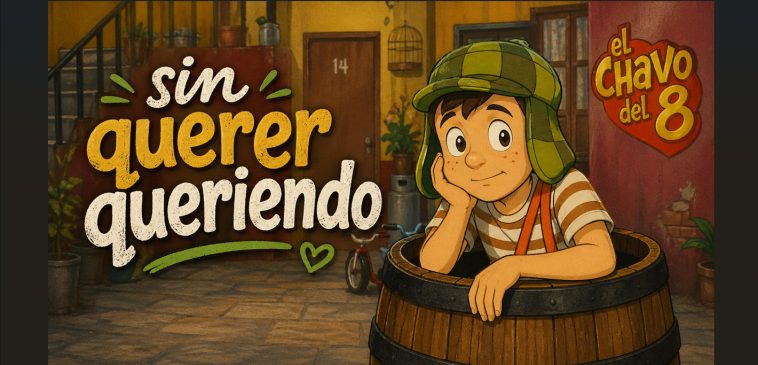
The phrase sin querer queriendo, made famous by El Chavo del Ocho, is one of those lines that sound like a contradiction but feel completely true. On its own, sin querer means “by accident” and queriendo means “on purpose,” so when you put them together you get something like “I didn’t mean to… but I kind of did.” El Chavo uses it whenever he messes up: he clearly caused the problem, but he tries to save himself with this half‑innocent, half‑guilty excuse, and that playful ambiguity is exactly why the phrase clicked with so many viewers in Latin America. In real life, people say sin querer queriendo when something looks like an accident but there was some intention behind it, or when they want to accept responsibility in a soft, humorous way—for example, Leí tu mensaje… sin querer queriendo (“I read your message… accidentally‑on‑purpose”), very close to saying in English, “I didn’t do it… but I kinda did.”