
 Admin
Admin
… understand the verb TOCAR
¡Hoy toca! Today is the day! to really understand how Spanish speakers use TOCAR.
The verb tocar looks simple (“to touch”), but in Spanish it has several very different meanings.
In this lesson, we focus on two very common ideas:
- Chance / luck / coincidence: “this happened to me by chance”.
- It’s time / it’s my turn: “today it’s dentist day”, “today I have to…”.
We will also quickly review the more literal meanings like “to touch”, “to play an instrument”, and “to ring/knock”.
1. “Me tocó…” – when something happens by chance
In Spanish, we use tocar + pronoun to talk about things that happen by chance or “by luck”, not because you planned them. It happened as a surprise, but not always a nice one. Something unexpected but still possible.
In English this is often “I happened to…”, “I got lucky/unlucky…”, or “it happened to me”.
Examples:
- Me tocó un huracán cuando fui a Cancún.
I happened to be in a hurricane when I went to Cancún. / I got a hurricane when I went to Cancún. - Cuando fui a Londres, me tocó ver a la reina Isabel.
When I went to London, I happened to see Queen Elizabeth. - Me tocó sentarme al lado de la ventana en el avión.
I happened to get the window seat on the plane. - A mi hermano le tocó hacer el examen primero.
My brother had to go first on the exam (it was his turn by chance).
Here tocar does not mean “to touch”.
It means something like: “it was my turn”, “it fell to me”, “that’s what I got”.
2. HOY TOCA, YA TOCA… it’s time / it’s my turn
Another very common meaning is tocar as “it’s time” or “it’s my/your turn”.
In English, depending on context, it can be:
it’s time, it’s my turn, or I have to.
Examples:
- Hoy toca ir al dentista.
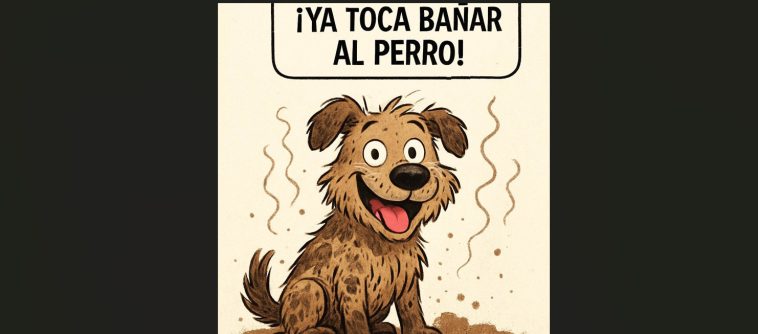
Today it’s time to go to the dentist. / Today I have to go to the dentist. Scheduled appointment. - Ya toca bañar al perro.
Now it’s time to give the dog a bath. / Today we have to wash the dog. Maybe the dog smells already. - Hoy me toca limpiar la casa.
Today it’s my turn to clean the house. - Mañana te toca a ti cocinar.
Tomorrow it’s your turn to cook. - ¡Hoy toca! Today is the day! This is a common and playfu, sometimes spicy phrase on Friday nights!
Patterns:
- Hoy toca + infinitive
Hoy toca estudiar. = Today it’s time to study. - Indirect Object Pronoun + toca + infinitive / noun
Hoy me toca examen. = Today I have an exam / it’s exam day for me.
Les toca presentar el proyecto mañana. = Tomorrow it’s their turn to present.
3. TOCAR = to touch (and “NO tocar”)
This is the basic meaning: tocar = to touch (physical contact).
- No me toques.
Don’t touch me. - “No Tocar”.
“Do not touch.” (Typical sign in museums, shops, etc.) - No toques esa planta.
Don’t touch that plant.
Notice that when the object is a person, Spanish usually adds a (no toques a tu hermana).
4. TOCAR an instrument (to play music)
Tocar is also used for playing musical instruments.
Here, tocar is not “to touch” but “to make music, to play”.
- Tocar la guitarra. = To play the guitar.
- Tocar el piano. = To play the piano.
- En la fiesta tocaron mis canciones favoritas.
At the party they played my favorite songs.
Important: for music we say tocar, not jugar (jugar is for games).
5. TOCAR the doorbell, the door, the bells
Another everyday use: tocar for making a sound to call or signal.
- Tocan el timbre.
Someone is ringing the doorbell. - Tocan las campanas.
The bells are ringing. - Tocan la puerta.
Someone is knocking at the door.
Depending on the country, “tocar la puerta” can mean to lightly touch, to knock, or simply “to call at the door”, but the idea is the same: you want someone inside to hear you.
6. Not only Spanish: other Romance languages
Spanish is not alone in using a “TOCAR = it’s my turn / it happened to me” pattern.
Other Romance languages show similar ideas.
In Italian, the verb is toccare.
Expressions like tocca a me mean “it’s my turn”, and mi tocca lavorare il sabato means “I have to work on Saturday (whether I like it or not)”.
In Portuguese, tocar also means “to touch” and “to play (music)”, and you