

 Admin
Admin
Some Spanish jokes are tricky for English speakers, not because the grammar is hard, but because they depend on a small cultural detail, a hidden assumption, or a little misunderstanding in the dialogue. Here are three short jokes, with translations and explanations in English so you can see what is going on.
| Spanish joke | English translation | Explanation |
|---|---|---|
| – Oye, ¿me prestas 50 euros? – Lo siento, solo tengo 10. – Venga, vale, dame los diez… ¡Pero me debes 40! |
“Hey, can you lend me 50 euros?” “Sorry, I only have 10.” “OK, fine, give me the ten… but then you owe me 40!” |
The joke is in the twisted logic. The first speaker still wants the full 50, so he decides that if his friend only gives him 10 now, the friend “still owes” him 40. It’s a very simple play with the idea of a loan and “owing” money. Now, the grammar: this is good practice with ¿me prestas…? (can you lend me…?) and me debes… (you owe me…). In this joke, the verb deber (“to owe”) is historically related to the English noun “debt.” |
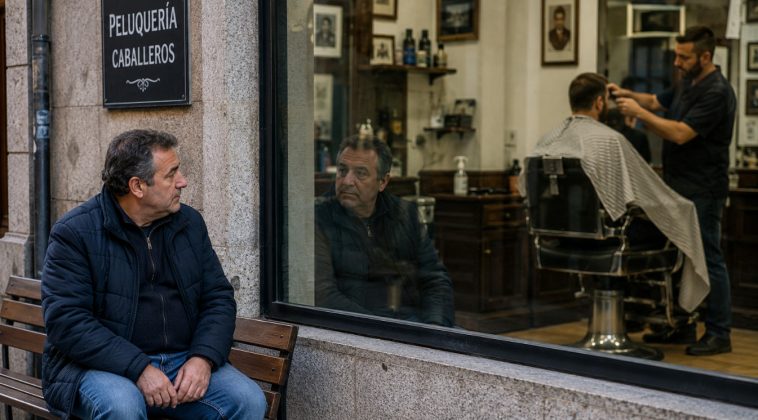
| Al cruzar por delante de una vidriera, un gallego se ve reflejado en el cristal, lo que provoca que se pase todo el día pensando: «¿De dónde conozco yo a ese tío que estaba en la vidriera? ¿Dónde lo he visto?»
Por la noche, ya acostado, sigue dándole vueltas en la cabeza y al fin cae en cuenta: «¡Coño, ya lo sé! ¡Es él que se corta el pelo delante de mí en la peluquería!» |
As he’s walking past a shop window, a Galician man sees his reflection in the glass, which makes him spend the whole day thinking: “Where do I know that guy in the window from? Where have I seen him?”
At night, already in bed, he is still thinking about it and finally realizes: “Damn, now I know! It’s the guy who gets his hair cut in front of me at the barbershop!” |
This is a classic “gallego” joke: in old Spanish humor, un gallego in a joke is a stock character who is naïve and a bit slow. The man does not realize he is just seeing his own reflection in the glass. Later he “recognizes” himself as the man who sits in front of him at the hairdresser’s, which is again just the mirror. Vocabulary notes: vidriera here is a shop window, se ve reflejado = he sees himself reflected, and darle vueltas a algo = to keep thinking about something. |
| Un gallego le dice a otro: – Oye, Manolo, pásame otro shampoo. – Pero si ahí en el baño hay uno. – Sí, hombre, pero este es para cabello seco y yo ya me lo he mojado. |
A Galician man says to another: “Hey, Manolo, pass me another shampoo.” “But there’s one there in the bathroom.” “Yes, man, but this one is for dry hair and I’ve already made mine wet.” |
This is another “gallego” joke built on a very literal reading of an everyday phrase from advertising (para cabello seco). Many shampoo bottles say things like “for dry hair” (para cabello seco), which means the type of hair, not that the hair must be physically dry at that moment. The joke is that the character understands it literally: since his hair is now wet, he thinks he needs a different shampoo. |
These jokes are useful because they show how much meaning hides in small words like me, deber, or the preposition para, and how culture and stereotypes can be part of the humor.